New generation weight loss medications…
Wegovy is a weight loss drug that is taking the world by storm! It arrived in little old New Zealand a few months ago. It’s a similar type of drug to Ozempic*, with many of my clients fascinated, after reading about in the media or seeing slimmed down celebrities using it. It’s become super common in countries like the US and UK (upwards of 15 million Americans are currently using these injectables). There are even modern terms associated with how the body can change and droop with its use – “Ozempic-face” and “Ozempic-vulva”.
*Ozempic has been registered in New Zealand since 2023 for use in Type 2 diabetes (not weight loss), whereas Wegovy has been registered since June 2025 as a weight loss drug. Both Ozempic and Wegovy are classified as semaglutide medications.
If you want to learn more about Wegovy and get a dietitian/nutritionist’s view, read on…
So, what exactly is Wegovy?
Wegovy is a semaglutide medication which essentially mimics our own gut hormone GLP-1. This clever hormone regulates blood glucose levels, delays stomach emptying and tells your brain your stomach is full…so you feel less hungry. We make it naturally ourselves but the medication provides way more than we are capable of producing.
It can help stop food noise (so we think less about food rather than fixating and obsessing over it). Plus, it reduces our appetite and therefore our food intake. This means less calories in and voila…weight loss! Sounds amazing and revolutionary? Well, kind of (but there are a few cons to it, see below).
Who is it for?
Ideally Wegovy is intended for those who are overweight/obese, and who are having difficulty with weight loss due to their biology, inability to exercise, medical conditions, medications and so on.
There are actually strong biological drivers that make weight loss difficult – the caveman brain fears famine and this has continued through in our biology to the modern age (even though famine isn’t really that common these days). So, when we try and lose weight intentionally, our body can interpret that as a famine and metabolically adapt to “help” avoid weight loss in order to survive. The process means well, but it can actually work against our wellbeing goals if we want or need to lose weight. So, weight loss is not simply a case of telling people to get off the couch and put less food in their mouth…these strong biological drivers can make weight loss quite tricky.
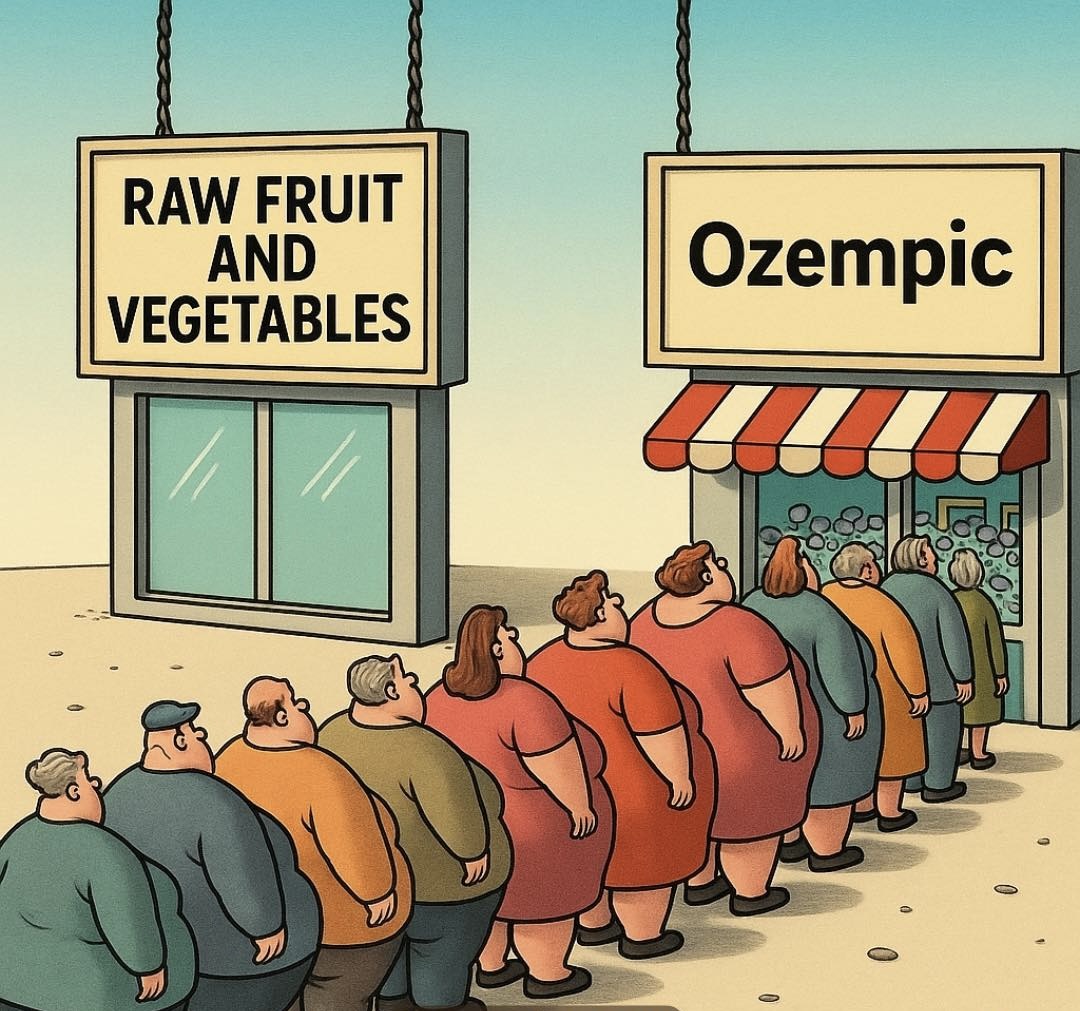
Wegovy is definitely not a cheat’s way to lose weight…it’s another tool in the box that could be considered for some people.
But it is also often used by those who want to slim down just a little…and this may be where it’s not necessarily a good idea (see below for the side effects and potential long-term consequences of this medication). I personally think this type of weight loss can be achieved more easily, enjoyably and sustainably with some knowledge and practical strategies/hacks (like those I share in my Nourished Weight Loss programme or even with a recipe ebook).

Main issues and side effects
💪 Muscle mass loss – this is a biggie. When we lose weight quickly, we often lose muscle mass. This can make us weaker and our bones can be negatively impacted too. Want to get off the toilet independently when you’re 80? You don’t want too much muscle mass loss. Want to avoid a broken hip if you have a fall? You don’t want weak bones.
.
💰 It’s expensive – it’s currently a self-funded medication (~$500/month – annually $6k)
.
🍎 Potential for nutrient deficiencies – because you feel less hungry, your food intake can reduce. Therefore, every bite is important in terms of nutrition. You can be unhealthy on the inside from lack of vitamins and minerals but in the healthy weight range…this doesn’t make you healthy.
.
💉 Fear of needles? You have to self-inject weekly which can be a real barrier for some people.
.
👟 Lifestyle changes for the long-term also need to be considered, as the cost and/or side effects may put people off staying on this medication for ever. How will you eat if you come off? What will need to change compared to what you did before? These are really important questions to ask before starting. Nutrition advice alongside this medication is super important, and choose someone who is knowledgeable, empathetic and realistic.
.
🩺 While delayed gastric emptying can be useful, there have been reports of some semaglutide users experiencing permanent gastroparesis (paralysis of the stomach which can result in vomiting and occasionally the inability to eat food ever again – instead tube feeding is the only option).
.
⚠️ Side effects – headaches, nausea, vomiting, diarrhea, constipation, fatigue, abdominal pain, as well as dizziness, smell aversions, burping, reflux, dry mouth, hair loss, gallstones, altered taste and low blood glucose levels. And the previously mentioned “droop”.
Is there anyone who shouldn’t take it?
It shouldn’t be taken by those with a history of restrictive eating disorders, those with pancreatitis, those who are pregnant or breastfeeding and anyone with a personal or family history of Medullary Thyroid Carcinoma or Multiple Endocrine Neoplasia syndrome type 2 (MEN 2).
Do I recommend it?
Potentially for some clients as it can be life changing.
But it’s definitely not for everyone.
I have had clients come to me for supportive advice from an experienced dietitian after deciding to take it which is great…I can help minimise the risk of nutrition issues and prepare them for what to do food-wise if and when they come off it. We can ensure they are not losing large amounts of muscle mass or weakening their bones. And still looking after their gut, hormone, heart and brain health.
So, there you have it…Wegovy in a nutshell. What are your thoughts? Would you consider it? If you’re keen to lose weight reach out for some expert and tailored advice, either with a 1:1 or jump on my Nourished Weight Loss programme waitlist.